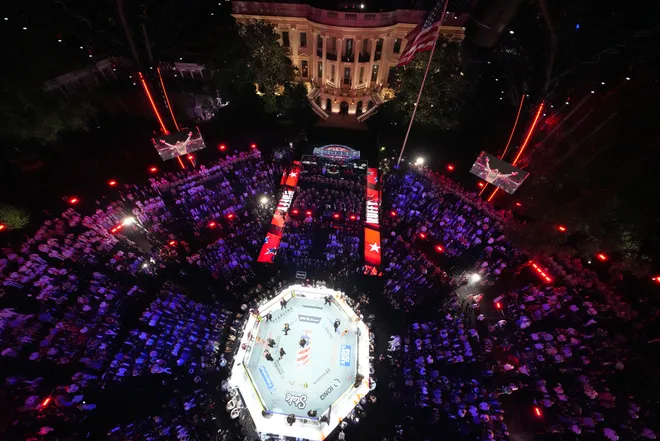










On June 14, 2026, the White House South Lawn became a stadium. A 92-foot steel canopy, called “The Claw,” covered a UFC Octagon as temperatures passed 95 degrees. UFC Freedom 250 delivered seven straight knockouts, ending with Justin Gaethje’s upset of lightweight champion Ilia Topuria. But while fight fans cheered, critics saw a troubling corporate stunt that blurred the line between public property and private profit.
Lawsuits, leaks, and classroom ethics
Before the first punch, the watchdog group The Public Integrity Project filed an emergency lawsuit calling the event deeply corrupt. The UFC, led by presidential ally Dana White, stood to make millions from broadcasting rights while using the White House as a free backdrop. Worse, taxpayers absorbed the hidden costs. While the UFC paid for its own stage production, federal agencies spent tens of thousands of hours on security. A “no-drone zone” and strict airspace lockdowns turned the executive mansion into a militarized zone for a blood sport. Legal experts warned that using public resources to subsidize a for-profit sport sets a dangerous precedent.
The event quickly turned chaotic behind the scenes and on the air. Leaked messages suggested political insiders sought betting tips from UFC camps, while fighters used the live broadcast for political attacks. Heavyweight Josh Hokit used his post-fight mic to launch a defamatory speech against former First Lady Michelle Obama, while fighter Sean Strickland was banned from official panels after making crude jokes about the Jeffrey Epstein case. What was meant to be a unifying event became a highly partisan spectacle.
The ultimate fallout of UFC Freedom 250 extends far beyond a single night of fights or political controversy. It serves as a stark case study in how modern media ethics, corporate power, and political influence intersect. When commercial interests can seamlessly bypass traditional public accountability to reshape historic spaces, the boundary between democratic institutions and corporate marketing fades. The spectacle on the South Lawn sets a precedent that will challenge media watchdogs and public relations experts for years, raising a fundamental question about the future of civic spaces: if institutional traditions are up for sale to the highest entertainment bidder, what boundaries remain?