




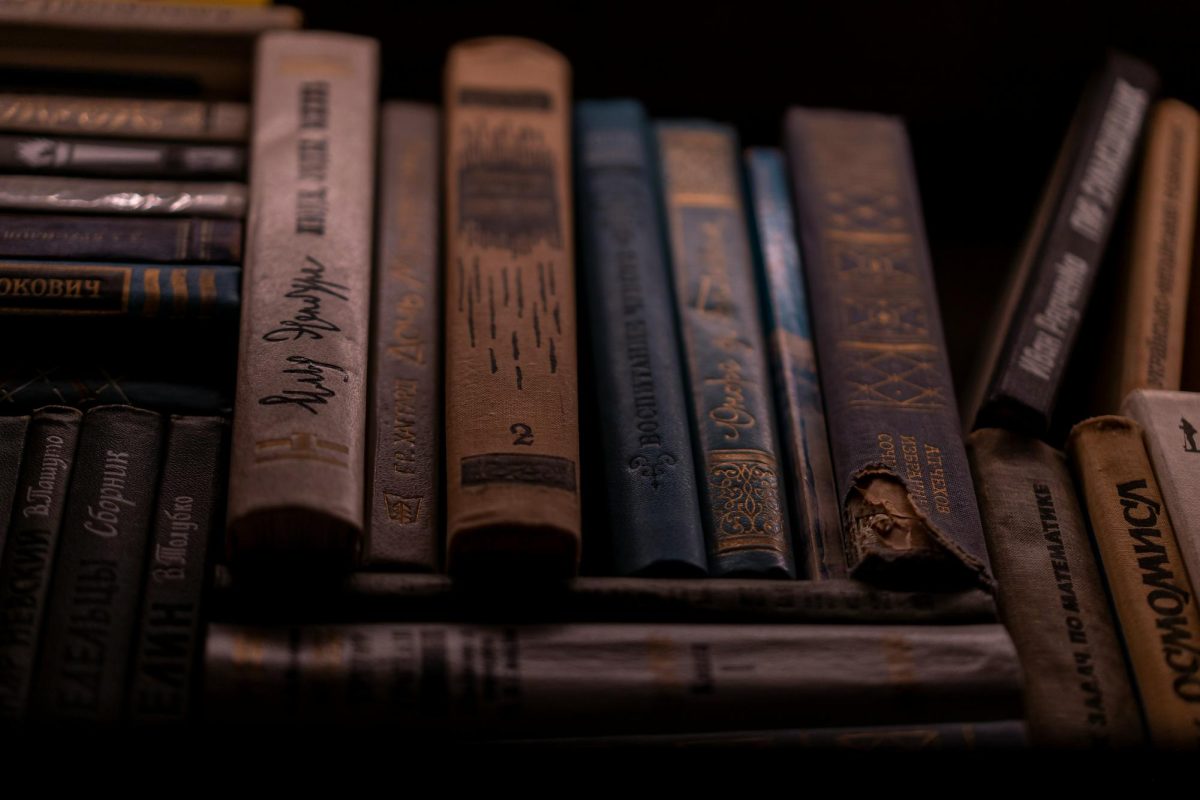



Retail bookstores are full of stories you haven’t read before, but the selection is deliberately organized to guide readers toward bestsellers and new releases at prices that aren’t always accessible. What’s more compelling than affordability, though, is stepping into a space where discovery isn’t engineered, and every shelf holds the possibility of something forgotten, unusual, or unexpectedly perfect.
That feeling of serendipity becomes tangible in the aisles of thrift stores across Houston. During a visit to Forgotten Angels, a nonprofit resale store in Pearland that supports adults with intellectual and developmental disabilities, I was struck by the care given to its book section. Shelves lined the back of the store, neatly organized by genre and easy to browse. Beyond the expected bestsellers stretched a sea of books from different decades. The first title that caught my attention was a peculiar little gray volume called A Candle in Her Heart. To my delight, sitting right beside it was a 2011 hardcover edition of A Dance with Dragons by George R. R. Martin.
My last find was A Collection of Readings for Writers by Harry Shaw, an out-of-print book that was published in 1967. By the time I left, I had spent six dollars and walked away with fiction, fantasy, and education on a whim of chance discoveries.
But the discovery didn’t end with the purchase.
Inside the front cover of A Candle in Her Heart, written in faint pencil was: Katie Jean Phillips, St. Louis, MO, Nov. 11, 1966.
I was stunned. This tiny book had journeyed from St. Louis through six decades before finding its way to a thrift store shelf in Houston. In A Collection of Readings for Writers, certain short stories had been highlighted, and within those stories, was marked what seemed to be someone’s favorite lines. There was something profound about that. I was connected, across time and geography, to someone I would never know.
Beyond the fun of the hunt lies what makes thrift-store book buying practical: affordability. For student readers and anyone navigating a tight budget, secondhand bookstores and thrift stores can mean the difference between owning a few books a year and building a personal library. Budget-friendly prices also encourage experimentation. When a book costs only a dollar or two, taking a chance on an unfamiliar author suddenly feels worthwhile.
And saving money is only part of the appeal. In recent years, debates over book bans have led to hundreds of titles being challenged or removed from some school and library collections across the United States, often because of their treatment of race, gender, sexuality, or other controversial topics. Secondhand shelves however, can continue circulating many of these books long after they disappear from official collections. Because thrift stores are shaped by donation rather than publishing trends or policies, they preserve a wider and often more unpredictable range of voices. That freedom matters.
Thrift store book hunting, at its most ordinary level, is about saving money and supporting a good cause. But, the most meaningful part remains deeply personal. The books you take home form a kind of accidental archive of yourself at different moments of discovery. What lingers isn’t the deal you found; it’s the intimacy of holding a story that traveled through time and lives to reach you. That’s worth far more than the shelf price, and it’s something no strategic bookstore shelf can replicate.